


Committee proposes GST data, salary records to reshape state GDP estimates

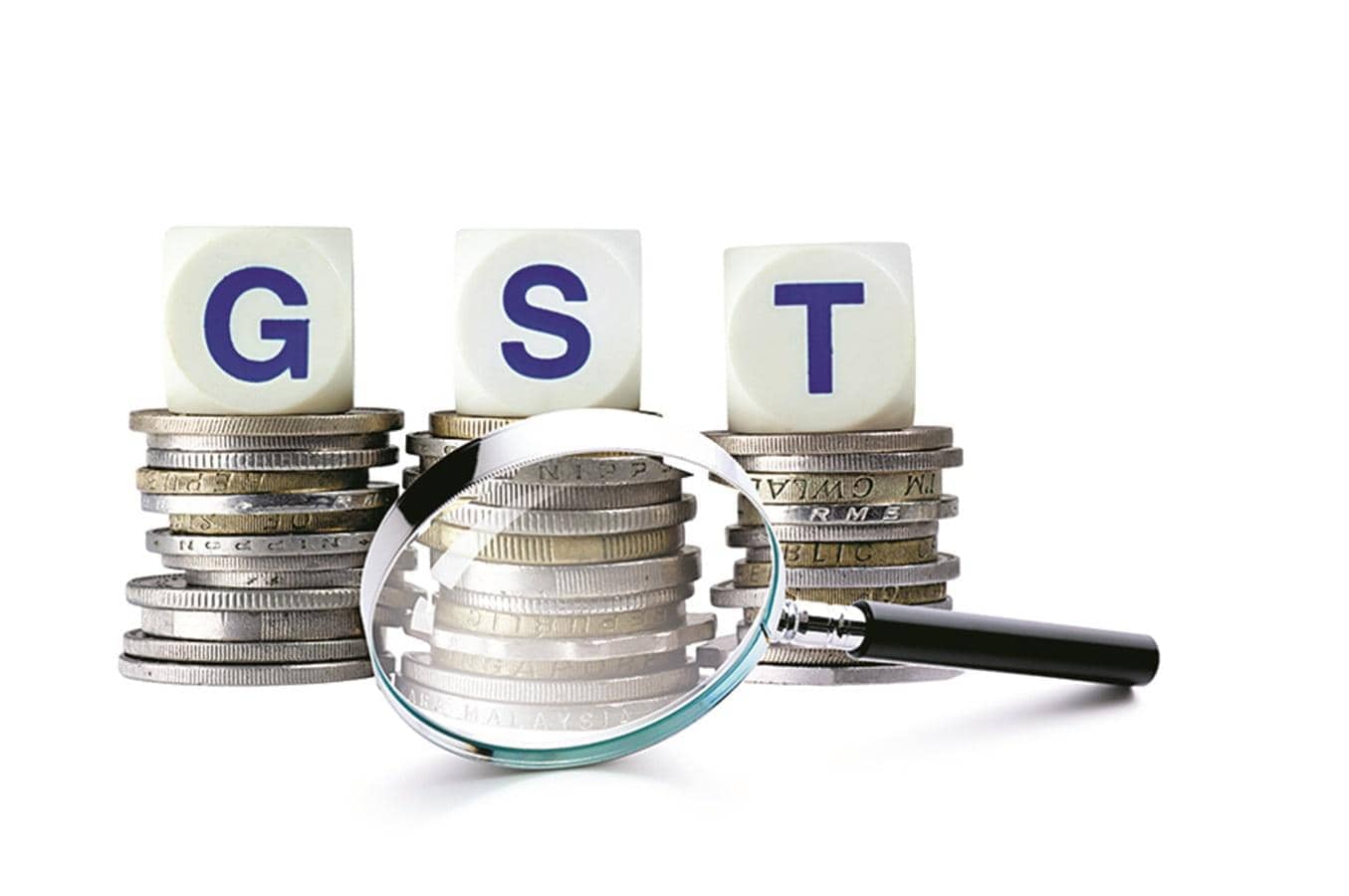


The committee tasked with proposing new methodologies for state-level economic output says indirect tax returns, salary payments made by the Centre in each state, and annual enterprise surveys should be made the basis for estimating economies in the 2022-23 base-year series.




The recommendations by the Sub-Committee on Regional Accounts come as the government seeks to reduce a reliance on outdated indicators and fixed ratios in calculations.
The committee’s report, released by the National Statistics Office (NSO) on Wednesday, noted that the proposed method would replace indicators such as state-wise consumption of cement and steel, a 2014 count of central government employees, and ratios fixed in the 2011-12 base year.
The recommendations are part of a broader exercise to improve the estimation of state domestic product (SDP) and district domestic product (DDP), including a shift towards direct estimation in some sectors, greater use of state-specific information and reduced dependence on allocation-based methods.
The central proposal concerns private companies outside agriculture, mining and manufacturing. In the 2011-12 series, their national value-added was divided among states using state-specific indicators. The sub-committee has recommended dividing it instead according to the Goods and Services Tax (GST) outward supplies each company reports in the states where it operates.
Also Read
"In the 2022-23 series, in order to make regional estimates more robust and dynamic in nature, it was proposed to use industry-wise outward supply data from GST for state-level allocation of all-India estimates for all industries except for agriculture and allied sector, mining sector and manufacturing sector," the report said.
The method rests on the assumption that a company's sales in a state reflect its production there.
For the central government, the sub-committee has recommended assigning value-added to states using salary payments recorded by location in the Public Financial Management System (PFMS). So far, this has been based on the number of central government employees in each state, from a census published in April 2014.
Further, for the unorganised sector, the Annual Survey of Unincorporated Sector Enterprises (ASUSE) has been proposed to split national figures among states, so that estimates can be updated every year. The survey will provide state-wise and industry-wise information to improve the allocation of gross value-added (GVA) of unincorporated enterprises, instead of relying on indicators that cannot be updated with the same frequency.
The report also recommended replacing several fixed rates. In forestry, inputs have been taken as a fixed 16.2 per cent of output, and the sub-committee has proposed revising this every year. "To improve accuracy and reflect changing expenditure patterns, it was proposed to revise the input rate annually using expenditure data compiled from state and Central government budget documents," the report said.
The sub-committee, chaired by Ravindra H Dholakia, was set up under the Advisory Committee on National Accounts Statistics (ACNAS), which is overseeing the revision of the national accounts base year from 2011-12 to 2022-23.
At constant prices, the sub-committee did not recommend the national "double deflation" method for state manufacturing. It proposed a single extrapolation using producer price indices instead.
"The chairperson observed that while introduction of double deflation may improve the estimation of constant price GVA at national level, there is a possibility of negative GSVA (gross state value-added) for some compilation categories in some states/UTs," the report noted.
Dholakia also called for base year revisions ideally every two to three years, and in no case later than every five years. He observed that a base year suited to the national series may not suit every state, and that states should carry out their own surveys and studies where needed.
"Price fluctuations are generally more pronounced at the state level, whereas such volatility tends to level out in national aggregations," the minutes of a meeting published in the report noted.
What's Your Reaction?
 Like
0
 Dislike
0
 Love
0
 Funny
0
 Wow
0
 Sad
0
 Angry
0














Comments (0)